

Table of contents
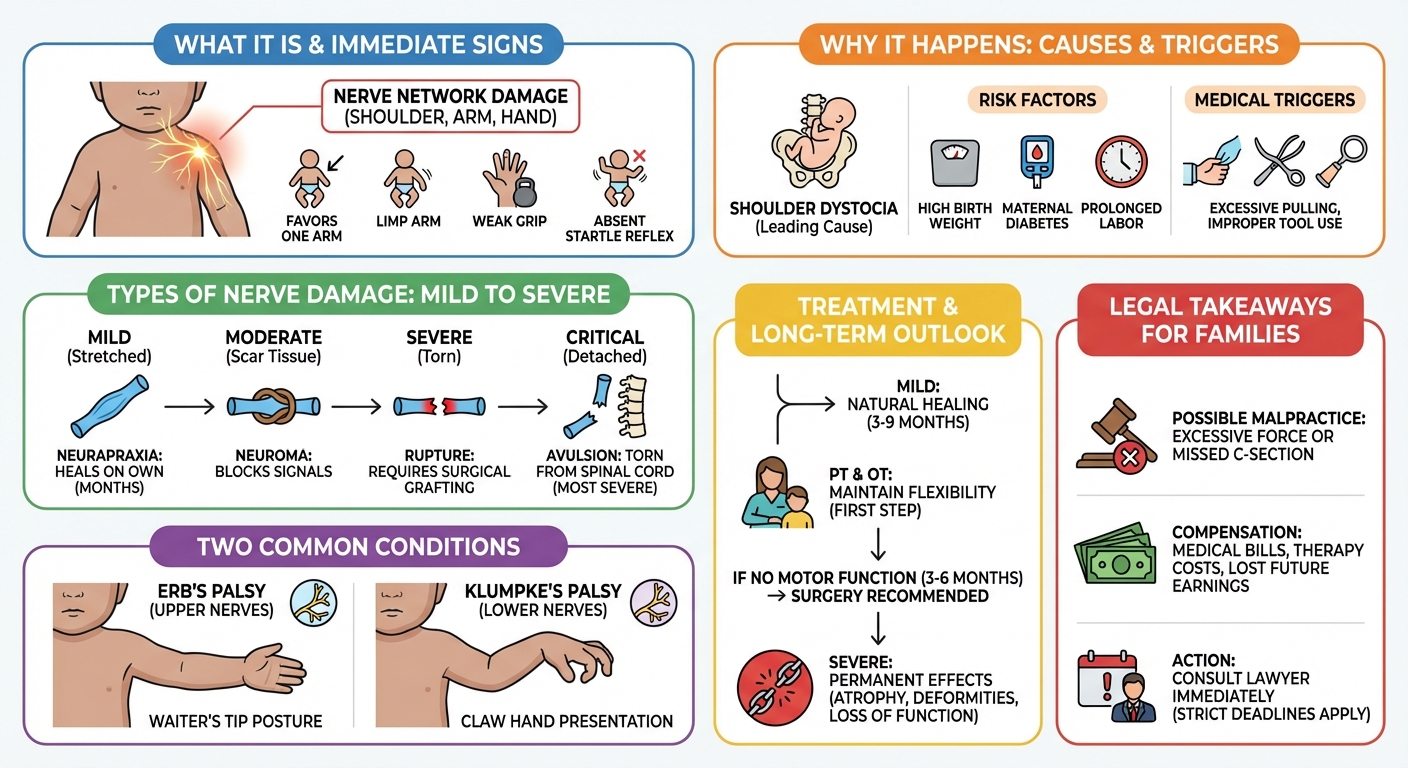
A brachial plexus birth injury occurs when the network of nerves controlling the shoulder, arm, and hand is stretched, compressed, or torn during childbirth. This often happens during difficult deliveries, such as when a baby’s shoulder becomes stuck (shoulder dystocia), leading to arm weakness or paralysis.
Brachial Plexus Birth Injury: A Complete Medical and Legal Guide
A brachial plexus birth injury occurs when the network of nerves responsible for sending signals from the spinal cord to the shoulder, arm, and hand is damaged during childbirth. While many infants recover fully, severe cases can lead to lifelong physical limitations and significant financial burdens for families.
Understanding the Brachial Plexus Nerve Network
The brachial plexus is a complex web of five major nerves (C5 through T1) rooted in the neck and upper spine. These nerves control both the motor functions (movement) and sensory functions (feeling) of the upper extremities. When these delicate fibers are subjected to excessive force, they can stretch, compress, or tear.
How Birth Injuries Affect Newborns
When an infant suffers a brachial plexus injury during delivery, the communication between the brain and the affected arm is disrupted. This can result in varying degrees of paralysis, numbness, or weakness. Depending on the severity of the damage, the child may require months of physical therapy or complex reconstructive surgeries to regain function.
What are the signs of a brachial plexus injury?
The signs of a brachial plexus injury in a newborn include a lack of movement in the affected arm or hand, a weakened grip, an absent Moro (startle) reflex, and the arm hanging limply by the baby’s side. In severe cases, the eyelid on the affected side may droop.
Immediate Symptoms After Delivery
Doctors and parents typically notice symptoms immediately after birth. Key indicators include:
- The newborn favors one arm over the other.
- The affected arm is bent at the elbow and held tightly against the body.
- Decreased grip strength on one side.
- Lack of spontaneous movement in the fingers, wrist, or shoulder.
Erb’s Palsy vs. Klumpke’s Palsy Symptoms
Brachial plexus injuries are often categorized based on which specific nerves are damaged. The two most common clinical presentations are Erb’s Palsy and Klumpke’s Palsy.
| Feature | Erb’s Palsy | Klumpke’s Palsy |
|---|---|---|
| Nerves Affected | Upper brachial plexus (C5, C6) | Lower brachial plexus (C8, T1) |
| Area of Weakness | Shoulder, upper arm, and elbow | Forearm, wrist, and hand |
| Common Posture | Arm hangs straight down, rotated inward (Waiter’s tip posture) | Fingers curled, wrist flexed (Claw hand presentation) |
Types of Brachial Plexus Nerve Damage
The severity of a brachial plexus birth injury depends entirely on the type of nerve damage sustained.
Neurapraxia (Stretching)
This is the most common and mildest form of injury. The nerve is stretched but not torn. Neurapraxia typically heals on its own within a few months, leaving no permanent damage.
Neuroma (Scar Tissue)
A neuroma occurs when a stretched nerve tries to heal itself, but scar tissue forms around the injury site. This scar tissue presses against the healthy nerve, restricting signal transmission. Recovery is possible but may be incomplete.
Rupture (Tearing)
A rupture means the nerve is torn, but not at the point where it attaches to the spinal cord. Because nerves cannot heal themselves across a gap, a rupture usually requires surgical intervention, such as a nerve graft, to restore function.
Avulsion (Severing from the Spinal Cord)
An avulsion is the most severe type of brachial plexus injury. The nerve root is completely torn away from the spinal cord. This causes permanent paralysis in the affected areas unless highly specialized nerve transfer surgeries are performed, and even then, full recovery is rare.
Common Causes: How Do These Injuries Happen During Childbirth?
Most brachial plexus injuries are preventable and occur due to mechanical trauma during a difficult vaginal delivery.
Shoulder Dystocia and Difficult Deliveries
The leading cause of brachial plexus injuries is shoulder dystocia. This is a medical emergency where the baby’s head is delivered, but their shoulder gets stuck behind the mother’s pelvic bone. If the delivering physician pulls too hard on the baby’s head or neck to free the shoulder, the brachial plexus nerves can severely stretch or tear.
Maternal Risk Factors (Diabetes, High Birth Weight)
Certain factors increase the risk of shoulder dystocia and subsequent nerve injuries:
- Macrosomia: A baby with a high birth weight (typically over 8 pounds, 13 ounces).
- Maternal Diabetes: Gestational diabetes often leads to larger babies with wider shoulders.
- Prolonged Labor: Labors that progress unusually slowly can indicate a disproportion between the baby’s size and the mother’s pelvis.
Improper Use of Delivery Tools (Forceps and Vacuum Extractors)
When labor stalls, doctors may use assistive devices like forceps or vacuum extractors. If these tools are applied improperly or with excessive force, they can twist or pull the infant’s neck unnaturally, damaging the brachial plexus.
How long does it take for a brachial plexus injury to heal?
It typically takes three to nine months for a mild brachial plexus injury to heal on its own. Nerves recover slowly, growing at a rate of about one inch per month. However, severe injuries involving torn or severed nerves may require surgery and can take years to reach maximum medical improvement.
What is the prognosis for a brachial plexus injury in a newborn?
The prognosis for a brachial plexus injury in a newborn is generally positive, with most infants recovering fully within a few months if the injury is mild. However, infants with severe nerve ruptures or avulsions face a guarded prognosis and may experience permanent weakness or loss of function despite surgical intervention.
Factors Influencing Recovery Rates
Recovery depends heavily on the type of nerve damage. Stretching injuries (neurapraxia) have a near 100% recovery rate. Conversely, avulsions have the poorest prognosis. Early diagnosis and immediate initiation of physical therapy also play crucial roles in maximizing recovery.
When to Expect Motor Function Return
Parents should look for signs of returning motor function within the first three to six months. If a baby shows no improvement in bicep function by the time they are three to six months old, pediatric neurologists typically recommend surgical evaluation.
What are the long term effects of brachial plexus injury at birth?
The long term effects of a severe brachial plexus injury at birth can include permanent muscle weakness, diminished arm or hand size, joint contractures, and abnormal bone growth. These physical limitations can significantly impact a child’s daily life, restricting their motor skills and ability to perform routine tasks independently.
Permanent Muscle Weakness and Atrophy
Without proper nerve signals, the muscles in the affected arm may not develop normally. This leads to muscle atrophy, meaning the injured arm may always be weaker and visibly thinner than the unaffected arm.
Joint Contractures and Bone Growth Issues
A lack of movement can cause the muscles and ligaments around the shoulder, elbow, or wrist to tighten, resulting in joint contractures. Over time, this abnormal muscle tension can alter the way bones grow, leading to joint deformities or a shorter arm length.
Impact on Daily Life and Motor Skills
Children with permanent brachial plexus damage often struggle with bilateral tasks—activities that require two hands, such as tying shoes, buttoning shirts, swimming, or playing certain sports. This can lead to frustration and require ongoing occupational therapy to learn adaptive techniques.
Treatment Options and Interventions
Early intervention is critical to ensuring the best possible outcome for a child with a birth injury.
Physical and Occupational Therapy
Therapy is the first line of defense. Daily range-of-motion exercises help keep the joints flexible and prevent contractures while the nerves heal. Occupational therapy focuses on helping the infant learn to use the affected arm in daily activities.
Surgical Interventions (Nerve Grafts and Transfers)
If there is no significant recovery by 3 to 6 months, surgery may be necessary. Common procedures include:
- Neurolysis: Clearing scar tissue away from the nerve.
- Nerve Grafting: Splicing a healthy nerve from another part of the body to bridge a torn brachial plexus nerve.
- Nerve Transfers: Rerouting a less important, functioning nerve to connect to the paralyzed muscle.
When is a Brachial Plexus Injury Considered Medical Malpractice?
Not all birth injuries are the result of negligence. However, if a doctor’s actions (or inactions) deviated from the standard of care and caused the injury, it may be considered medical malpractice.
Proving Doctor or Hospital Negligence
To prove malpractice, a birth injury lawyer must demonstrate that the healthcare provider failed to act as a reasonably competent medical professional would have under similar circumstances. This often requires testimony from medical experts who review the delivery records.
Failure to Perform a C-Section
If a mother had known risk factors for shoulder dystocia (such as gestational diabetes or a very large baby), the standard of care often dictates that the doctor should have offered or ordered a Cesarean section. Failing to recognize these red flags and forcing a vaginal delivery can be grounds for a lawsuit.
Excessive Force During Delivery
When shoulder dystocia occurs, doctors are trained to use specific maneuvers (like the McRoberts maneuver) to safely dislodge the baby. If a doctor panics and pulls forcefully on the baby’s head, or uses forceps improperly, they can be held liable for the resulting nerve damage.
Seeking Compensation for Your Child’s Birth Injury
Raising a child with a severe brachial plexus injury is expensive. A successful medical malpractice claim can provide the financial resources necessary for your child’s lifelong care.
Damages You Can Recover (Medical Bills, Future Care, Pain and Suffering)
Compensation in a birth injury lawsuit typically covers:
- Past and future medical expenses (including surgeries and hospital stays).
- Lifelong physical and occupational therapy costs.
- Assistive devices and adaptive equipment.
- Loss of future earning capacity if the child’s disability limits their career options.
- Pain, suffering, and emotional distress.
Statute of Limitations for Birth Injuries in Texas
Every state has a strict deadline for filing a medical malpractice lawsuit, known as the statute of limitations. In Texas, the laws regarding minors are complex. While standard medical malpractice claims must be filed within two years, cases involving minors may have different tolling provisions. However, waiting can destroy vital evidence. It is crucial to consult a Houston personal injury lawyer immediately to protect your rights.
How a Birth Injury Lawyer Can Help Your Family
Navigating a medical malpractice claim against a hospital’s legal team is incredibly difficult. An experienced birth injury attorney will secure your medical records, consult with top pediatric neurologists and OB-GYNs, and build a compelling case to ensure your child receives the justice and financial support they deserve.