
Table of contents
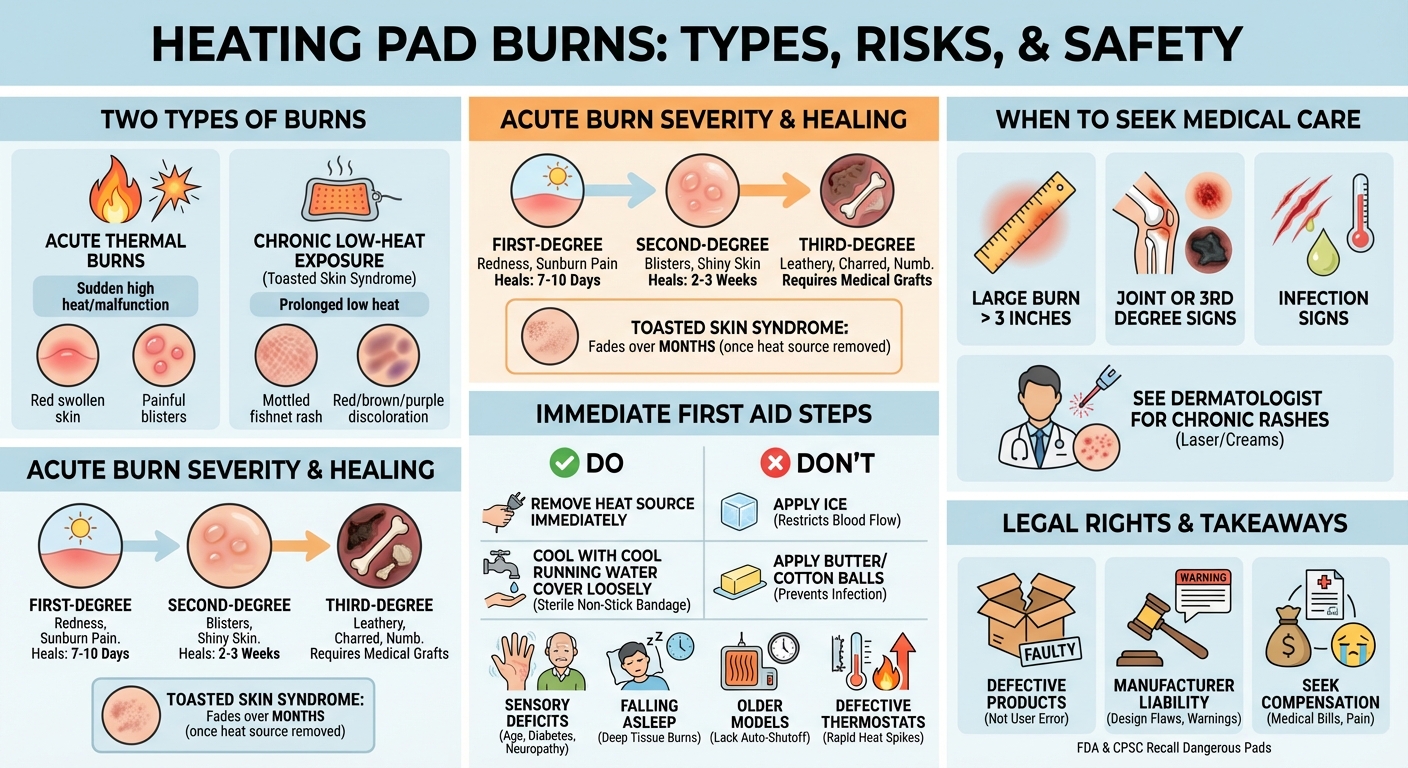
A burn from a heating pad looks different depending on the exposure. Acute burns appear as bright red, swollen skin, often with painful blisters. Chronic low-heat exposure causes Toasted Skin Syndrome, which looks like a mottled, fishnet-like rash with red, brown, or purplish discoloration across the affected area.
Understanding Heating Pad Burns: Acute vs. Chronic
Heating pad injuries generally fall into two categories: acute thermal burns and chronic low-heat damage. Understanding the difference is critical for proper treatment and identifying potential product defects.
Acute thermal burns happen suddenly. They occur when a heating pad malfunctions, spikes in temperature, or is left on a high setting against bare skin. These burns damage the epidermis and dermis rapidly, much like touching a hot stove.
Chronic low-heat exposure causes a different type of injury. Prolonged use of a heating pad on a moderate setting can slowly damage the skin over weeks or months. Unlike a hot water bottle that naturally cools down, an electric heating pad delivers a continuous, unrelenting heat supply, making it uniquely dangerous if left unmonitored.
What would a burn from a heating pad look like?
A burn from a heating pad looks different depending on the exposure. Acute burns appear as bright red, swollen skin, often with painful blisters. Chronic low-heat exposure causes “Toasted Skin Syndrome,” which looks like a mottled, fishnet-like rash with red, brown, or purplish discoloration across the affected area.
Acute Burn Symptoms
- First-degree burns: Redness, mild swelling, and pain that feels like a severe sunburn.
- Second-degree burns: Deep redness, significant swelling, shiny or wet-looking skin, and blister formation.
- Third-degree burns: Leathery, white, or charred skin that may be numb due to nerve damage.
Identifying Toasted Skin Syndrome (Erythema Ab Igne)
Erythema ab igne translates to “redness from fire.” It is the medical term for Toasted Skin Syndrome. The signature symptom is a hyperpigmented, net-like (reticular) rash. It typically mirrors the exact size and shape of the heating pad. Over time, the skin may also thin out or become mildly itchy.
How to fix a burn from a heating pad?
To fix an acute burn from a heating pad, immediately remove the heat source and cool the skin with cool (not cold) running water for 10 to 15 minutes. Cover the area loosely with a sterile, non-stick bandage. Avoid applying ice, butter, or popping any blisters, which increases infection risk.
Immediate First Aid and What to Avoid
Proper first aid minimizes tissue damage and prevents infection. Follow these steps for acute burns:
- Cool the skin: Use cool water or a cool, damp compress.
- Protect the area: Apply a sterile gauze pad. Do not use cotton balls, as fibers can stick to the burn.
- Do not use ice: Ice restricts blood flow and can cause frostbite on already damaged tissue.
- Leave blisters alone: Popping blisters opens the skin to bacteria.
When to Seek Emergency Medical Attention
Go to an urgent care clinic or emergency room if the burn is larger than three inches in diameter, covers a joint, or exhibits signs of a third-degree burn (leathery, painless skin). You should also seek medical care if you notice signs of infection, such as red streaks, oozing pus, or a fever.
Will heating pad burns go away?
Yes, most minor heating pad burns will go away within one to two weeks with proper care. However, severe second or third-degree burns may leave permanent scars. The mottled rash from Toasted Skin Syndrome usually fades over several months once the heat source is permanently removed.
Healing Timelines and Prognosis
First-degree burns typically resolve in 7 to 10 days without scarring. Second-degree burns take 2 to 3 weeks to heal and may leave slight discoloration. Third-degree burns require medical intervention, such as skin grafts, and will result in permanent scarring.
For Erythema Ab Igne, the prognosis is generally good if caught early. The hyperpigmentation slowly fades, but in severe, long-term cases, the discoloration can become permanent. In very rare instances, chronic Erythema Ab Igne can develop into skin cancer (squamous cell carcinoma), making monitoring essential.
How to reverse skin damage from a heating pad?
To reverse skin damage from a heating pad, you must first stop using the device completely. For persistent hyperpigmentation from Toasted Skin Syndrome, dermatologists may prescribe topical retinoids, hydroquinone creams, or recommend laser therapy to break down the excess pigment and stimulate healthy skin regeneration.
Dermatological Treatments
If the fishnet rash does not fade on its own after several months, a dermatologist can help accelerate the process. Common treatments include:
- Topical Creams: Retinoids (like tretinoin) speed up cell turnover, while hydroquinone lightens dark spots.
- Laser Therapy: Intense Pulsed Light (IPL) or fractional lasers can target and break down the hyperpigmented cells.
- Moisturization: Using high-quality emollients helps repair the skin barrier damaged by chronic heat.
Why Do Heating Pads Cause Severe Burns?
Heating pads are a common household item, but they carry significant risks, particularly for vulnerable populations.
Sensory Deficits
Elderly individuals and patients with conditions like diabetes or neuropathy often have reduced skin sensation. They may not feel that a heating pad is burning their skin until severe, second or third-degree damage has already occurred.
The Dangers of Falling Asleep
Using a heating pad in bed is highly dangerous. As body temperature naturally drops during sleep, a heating pad can easily cause deep tissue burns if left on the same spot for hours.
Lack of Automatic Shut-Off Features
Many older or cheaply manufactured heating pads lack an auto-shutoff timer. Modern safety standards dictate that heating pads should turn off automatically after 20 to 120 minutes, but defective or outdated models bypass this safeguard.
Defective Heating Pads and Your Legal Rights
Not all heating pad burns are the user’s fault. In many cases, severe burns are the direct result of a defective product.
Thermostat Failures and Faulty Wiring
Electric heating pads rely on internal thermostats to regulate temperature. If this component fails, the pad can rapidly heat up to dangerous levels, melting the fabric and causing third-degree burns. Faulty wiring can also lead to electrical shocks or bed fires.
Product Liability and Manufacturer Negligence
Under product liability law, manufacturers have a legal duty to ensure their products are safe for consumer use. If a company sells a heating pad with a design flaw, manufacturing defect, or inadequate warning labels, they can be held financially responsible for the injuries that result.
FDA Recalls and Legal Action
The FDA and the Consumer Product Safety Commission (CPSC) frequently recall electric heating pads due to burn and fire hazards. If you or a loved one suffered severe burns, required skin grafts, or experienced a fire caused by a heating pad, you may have grounds for a personal injury claim. Consulting with a product liability attorney can help you recover compensation for medical bills, lost wages, and pain and suffering.