

Table of contents
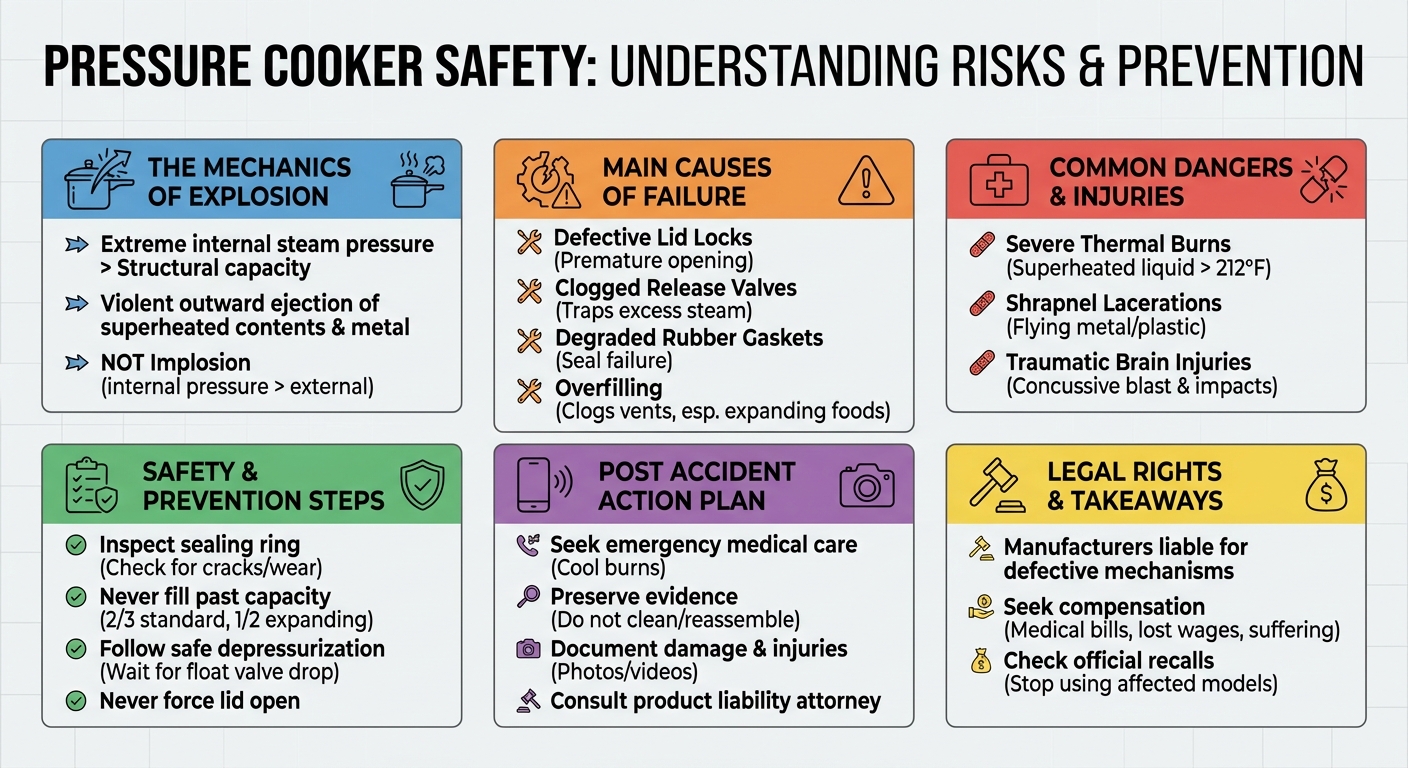
A pressure cooker explosion occurs when internal pressure exceeds the device’s structural capacity, usually due to defective safety mechanisms. Common causes include faulty lid locks, clogged release valves, and damaged gaskets. When these fail, boiling liquids and steam erupt violently, causing severe burns and traumatic injuries.
The Physics of Kitchen Accidents: Would a pressure cooker implode or explode?
A pressure cooker will explode, not implode. Implosions happen when external pressure crushes an object with a lower internal pressure. Because a pressure cooker traps steam to generate extremely high internal pressure, structural failure results in an outward explosion, violently ejecting boiling contents and metal parts.
What causes pressure cooker explosions?
Pressure cooker explosions are primarily caused by defective components or improper use that prevents steam from escaping safely. The most common culprits include faulty pressure release valves, defective lid locks that open while pressurized, damaged rubber gaskets, and overfilling the pot, which clogs the venting systems.
Defective Gaskets and Seals
The rubber gasket creates an airtight seal that allows the appliance to build pressure. If the gasket is torn, degraded, or improperly seated, pressure can escape unpredictably. In some cases, a blowout of the gasket can cause a sudden, violent release of steam and boiling liquid, leading to severe burns.
Faulty Pressure Release Valves
Pressure cookers rely on release valves to vent excess steam and maintain a safe internal pressure. If these valves are defectively designed or become clogged with food debris, the pressure inside the pot can build until it exceeds the structural limits of the appliance, resulting in a catastrophic explosion.
Inadequate or Malfunctioning Lid Locks
Modern electric pressure cookers are marketed with safety features designed to prevent the lid from opening while the unit is pressurized. However, defective lid locks can fail, allowing a user to easily twist the lid off. When this happens, the sudden drop in atmospheric pressure causes the superheated liquid inside to instantly boil and erupt outward.
Overfilling and Clogged Vents
Filling a pressure cooker beyond its maximum capacity is incredibly dangerous. Foods that expand during cooking, such as rice, beans, or grains, can easily clog the steam release vent. When the vent is blocked, the appliance loses its primary method of regulating internal pressure.
| Component Failure | Mechanism of Explosion |
|---|---|
| Defective Lid Lock | Allows user to open the pot while still highly pressurized, causing an immediate eruption. |
| Clogged Release Valve | Traps excess steam, causing internal pressure to exceed the pot’s structural integrity. |
| Degraded Gasket | Fails to maintain a safe seal, leading to sudden steam blowouts. |
Common Injuries Resulting from Exploding Pressure Cookers
When a pressure cooker fails, the results are often devastating. The combination of flying metal and superheated liquids ejected at high speeds creates a highly dangerous environment in the kitchen.
Severe Thermal Burns and Scalding
The most common injuries from pressure cooker explosions are second- and third-degree thermal burns. The contents of a pressure cooker can reach temperatures well over 212 degrees Fahrenheit. When ejected, this sticky, boiling liquid adheres to the skin, causing deep tissue damage that often requires skin grafts and leaves permanent scarring.
Lacerations from Shrapnel
An exploding pressure cooker can send heavy metal lids, valves, and shattered plastic flying across the room. Victims frequently suffer deep lacerations, puncture wounds, and facial injuries from this high-velocity shrapnel.
Traumatic Brain Injuries (TBI)
In severe cases, the force of an exploding lid striking a victim in the head or face can cause a traumatic brain injury. The concussive force of the blast, combined with heavy projectile impacts, can lead to long-term cognitive and physical impairments.
How do I make sure my pressure cooker doesn’t explode?
To make sure your pressure cooker doesn’t explode, always inspect the rubber gasket for cracks before use and ensure the release valve is clean. Never fill the cooker past the maximum fill line, especially with expanding foods, and always follow the manufacturer’s safe depressurization protocols before opening the lid.
Inspect the Rubber Gasket Regularly
Before every use, examine the silicone or rubber sealing ring. Look for cracks, stretching, or brittleness. If the gasket shows any signs of wear, replace it immediately with a manufacturer-approved part. A compromised seal is a major safety hazard.
Never Exceed the Maximum Fill Line
Adhere strictly to the fill lines marked on the inside of the inner pot. As a general rule, never fill the cooker more than two-thirds full for standard foods, and no more than half full for foods that expand or foam, like beans, rice, or pasta.
Follow Safe Depressurization Protocols
Never force the lid open. Whether you are using the natural release or quick release method, wait until the float valve has completely dropped, indicating that all internal pressure has safely dissipated. If the lid feels stuck, the pot is likely still pressurized.
What should I do after a pressure cooker explodes?
After a pressure cooker explodes, immediately seek emergency medical attention for any burns or injuries. Once safe, document the scene with photos, preserve the defective pressure cooker and all its parts without cleaning them, and consult a product liability attorney to explore your legal options for compensation.
Seek Immediate Medical Attention for Burns
Your health is the top priority. Cool the burn with cool (not ice-cold) water and seek emergency medical care immediately. Severe scalds carry a high risk of infection and often require specialized treatment at a burn center.
Preserve the Evidence (Do Not Throw the Cooker Away)
It is crucial to keep the pressure cooker, the lid, the gasket, and all related components exactly as they are. Do not clean the appliance, attempt to reassemble it, or throw it in the trash. This physical evidence is vital for proving a product defect.
Document the Scene and Your Injuries
Take clear photographs and videos of the kitchen, showing where the contents landed and the damage to the surrounding area. Additionally, document your injuries thoroughly from the day of the accident and throughout your recovery process.
Consult a Product Liability Attorney
Pressure cooker explosions are frequently the result of manufacturing or design defects. Consulting with an attorney who specializes in defective product lawsuits can help you understand your rights and pursue compensation for medical bills, lost wages, and pain and suffering.
Pressure Cooker Recalls and Your Legal Rights
Consumers have a right to expect that the appliances they purchase are safe when used as directed. When safety mechanisms fail, the law provides avenues for victims to seek justice.
Holding Manufacturers Accountable for Defective Products
Product liability laws hold manufacturers, distributors, and retailers strictly liable if a defective product causes injury. If your pressure cooker exploded due to a faulty lid lock or defective valve, you may be entitled to significant financial compensation, regardless of whether the specific model was recalled.
Recent Brand Recalls and Lawsuits
In recent years, numerous major brands have faced lawsuits and issued recalls due to explosion risks. Lawsuits frequently allege that manufacturers marketed their products as perfectly safe while knowing about critical flaws in their safety mechanisms. If you own a recalled model, such as certain Ninja Foodi or Instant Pot units, stop using it immediately and check the Consumer Product Safety Commission (CPSC) guidelines for your specific device.