
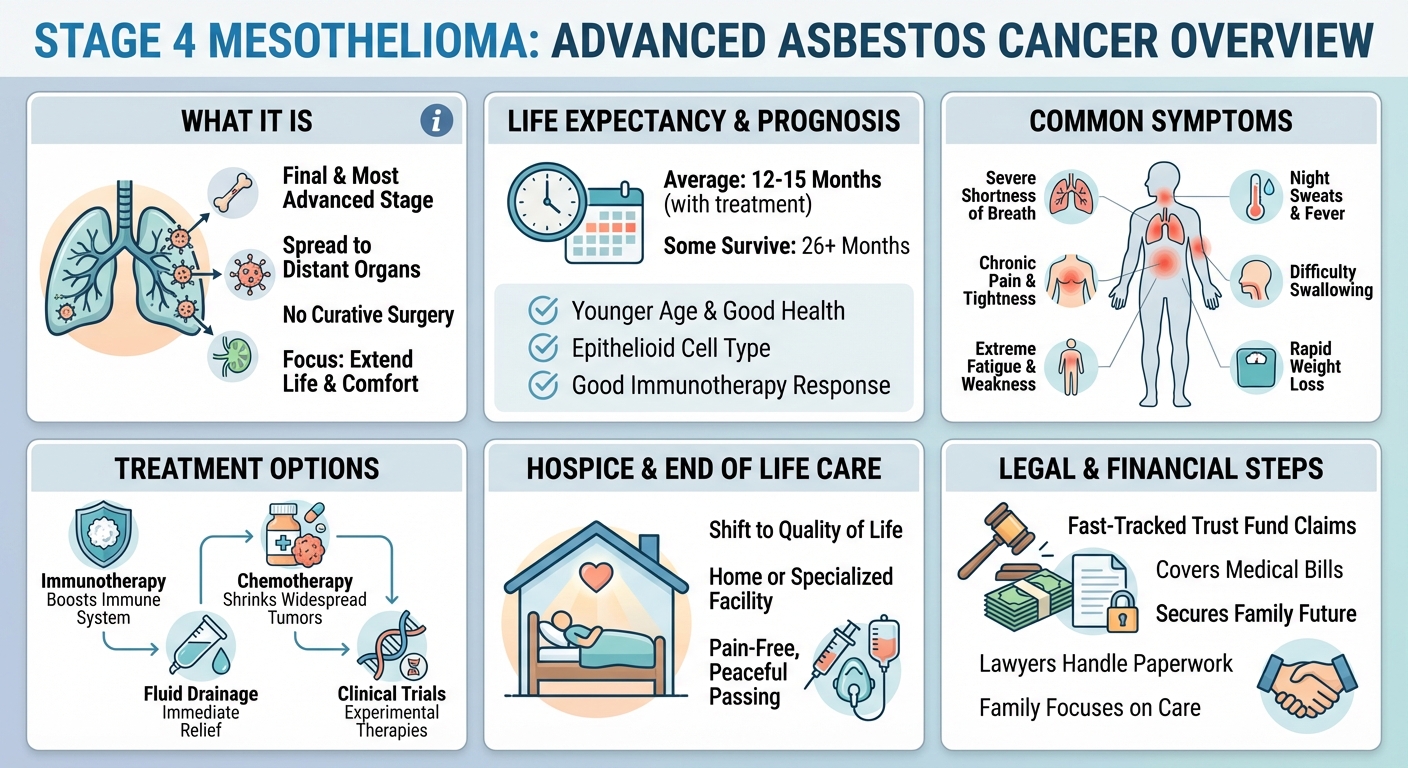
Stage 4 mesothelioma is the most advanced stage of the disease, meaning the cancer has spread from its original location to distant organs, lymph nodes, or bones. The average life expectancy is 12 to 15 months, and treatment focuses on palliative care to manage pain and improve quality of life.
What is Stage 4 Mesothelioma?
Stage 4 mesothelioma is the final and most advanced stage of this rare, asbestos-related cancer. By the time a patient reaches this stage, the disease has progressed significantly, making curative treatments like major surgery no longer viable. Instead, medical care shifts entirely toward extending life and maximizing the patient’s comfort.
Understanding Metastasis in Advanced Mesothelioma
The defining characteristic of stage 4 mesothelioma is metastasis. This means the cancer cells have broken away from the original tumor site—typically the lining of the lungs (pleura) or abdomen (peritoneum)—and spread to distant parts of the body. In stage 4, tumors may be found in the liver, brain, bones, distant lymph nodes, or the opposite side of the chest.
How Stage 4 Differs from Earlier Stages
In stages 1 through 3, mesothelioma is generally localized to one side of the body or has only spread to nearby tissues and local lymph nodes. Earlier stages often allow for aggressive, life-saving surgeries. In contrast, stage 4 tumors are too widespread to be safely or effectively removed by surgery. The focus shifts from curing the disease to managing its symptoms.
Stage 4 Mesothelioma Life Expectancy & Prognosis
How long do you live with stage 4 mesothelioma?
The average life expectancy for stage 4 mesothelioma is typically 12 to 15 months with treatment. However, some patients may live 26 months or longer depending on their overall health, the cell type of the tumor, and how well they respond to palliative therapies like immunotherapy or chemotherapy.
What stage of mesothelioma is death?
Mesothelioma is considered a terminal illness, and death most commonly occurs in stage 4, the final and most advanced stage of the disease. At this point, the cancer has spread extensively throughout the body, eventually causing vital organs, such as the lungs or heart, to fail.
Factors That Can Impact Your Prognosis
While the statistics for stage 4 are daunting, life expectancy is not set in stone. Several factors influence an individual’s prognosis:
- Cell Type: Epithelioid cells respond better to treatment than sarcomatoid or biphasic cells.
- Patient Age and Health: Younger patients with strong immune systems generally tolerate life-extending treatments better.
- Treatment Response: Patients who respond favorably to modern immunotherapies often outlive average statistical expectations.
Symptoms of Stage 4 Mesothelioma
Common Respiratory and Systemic Symptoms
Because the tumors have spread and grown larger, stage 4 symptoms are far more pronounced than in earlier stages. Patients frequently experience:
- Severe shortness of breath (dyspnea)
- Tightness and chronic pain in the chest or abdomen
- Extreme fatigue and weakness
- Unexplained, rapid weight loss
- Night sweats and fever
- Difficulty swallowing (dysphagia)
Is stage 4 cancer extremely painful?
Stage 4 cancer can be extremely painful, as tumors may press against nerves, bones, and major organs. In stage 4 mesothelioma, patients often experience severe chest or abdominal pain. However, doctors use advanced palliative treatments and strong medications to effectively manage and minimize this pain.
Treatment Options for Advanced Mesothelioma
Palliative Chemotherapy and Immunotherapy
While curative surgery is off the table, medical intervention remains crucial. Immunotherapy (such as the combination of Opdivo and Yervoy) has become a frontline treatment for advanced mesothelioma, helping the body’s immune system recognize and attack cancer cells. Chemotherapy is also widely used to shrink tumors, slow the spread of the disease, and relieve pressure on organs.
Minor Surgeries for Fluid Drainage (Thoracentesis & Pleurodesis)
A common complication of stage 4 mesothelioma is the painful buildup of fluid around the lungs (pleural effusion) or abdomen (ascites). Doctors perform minor, minimally invasive procedures to drain this fluid:
- Thoracentesis/Paracentesis: Using a needle to drain fluid and provide immediate breathing relief.
- Pleurodesis: Sealing the space between the lung and chest wall to prevent fluid from returning.
Clinical Trials for Late-Stage Patients
Many patients with advanced mesothelioma choose to participate in clinical trials. These trials offer access to cutting-edge, experimental treatments—such as targeted gene therapies, CAR T-cell therapy, or novel immunotherapy drugs—that are not yet available to the general public.
End-of-Life Care and Comfort
Transitioning to Hospice Care
When treatments are no longer effective or the side effects outweigh the benefits, transitioning to hospice care is a compassionate next step. Hospice focuses entirely on the patient’s quality of life. Care can be provided at home or in a specialized facility, ensuring the patient is surrounded by loved ones while receiving professional medical support for symptom management.
Is dying of mesothelioma painful?
Dying of mesothelioma does not have to be painful. While the disease itself causes severe discomfort, hospice care teams specialize in end-of-life pain management. Through the use of powerful analgesics, oxygen therapy, and palliative sedation, medical professionals can ensure the patient passes peacefully and comfortably.
Financial Assistance and Expedited Legal Claims for Stage 4 Patients
Fast-Tracking Asbestos Trust Fund Claims
A stage 4 diagnosis brings immense emotional and financial stress. Fortunately, the legal system recognizes the urgency of advanced mesothelioma. Asbestos trust funds and courts often allow stage 4 claims to be expedited. This means patients can receive compensation to cover mounting medical bills and end-of-life care in a matter of months, rather than years.
Securing Your Family’s Financial Future
Filing a legal claim is rarely about the patient themselves; it is about protecting the family left behind. Compensation recovered from negligent asbestos companies ensures that a patient’s spouse and children are not burdened with medical debt and are financially secure for the future.
How a Texas Mesothelioma Lawyer Can Help Immediately
When dealing with stage 4 mesothelioma, time is of the essence. An experienced Texas mesothelioma lawyer can handle the entire legal process—gathering medical records, identifying asbestos exposure sites, and filing expedited claims—without requiring the patient to travel or endure stressful court appearances. This allows the patient and their family to focus entirely on comfort, care, and spending precious time together.
 Call (713) 747-7777