

Table of contents
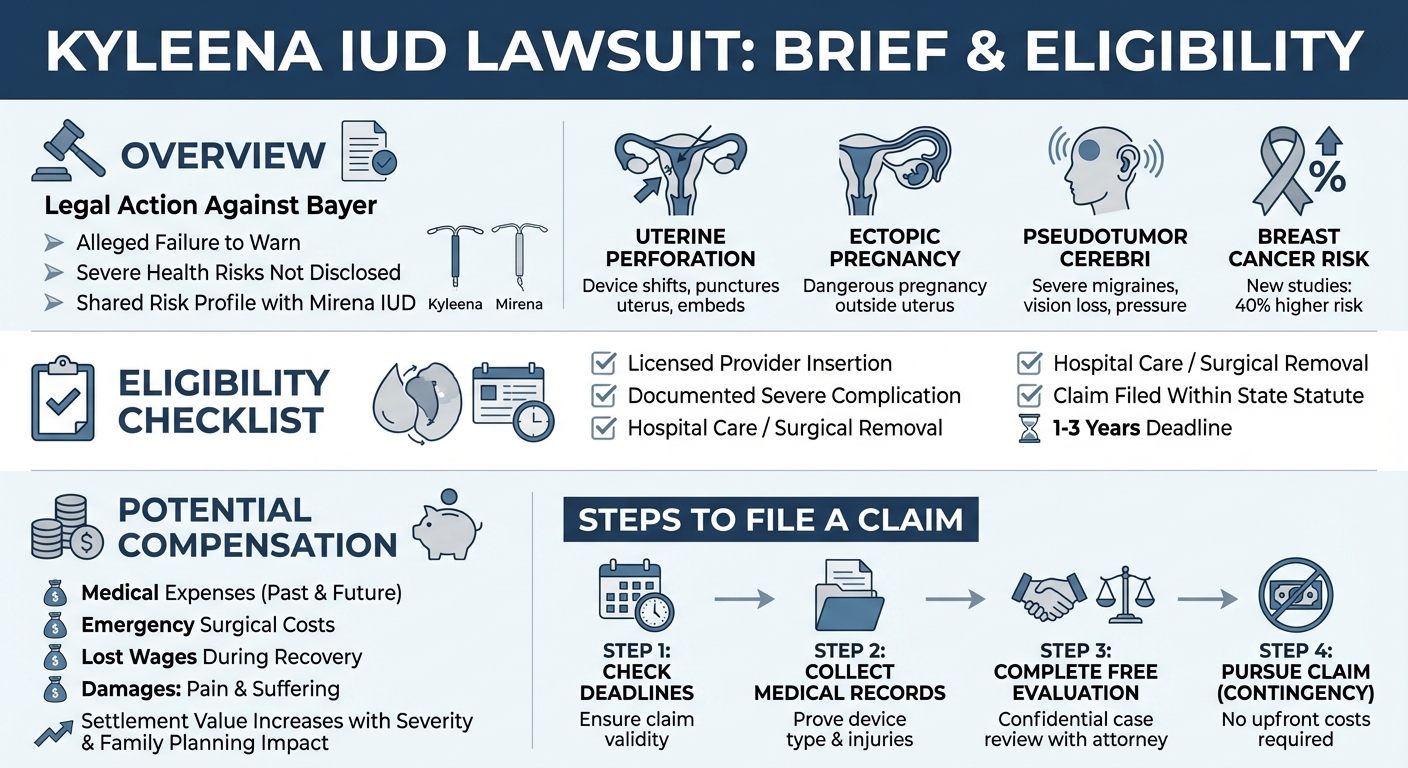
Women who suffered severe complications from the Kyleena IUD may be eligible to file a lawsuit against the manufacturer, Bayer. Qualifying injuries include uterine perforation, device migration, ectopic pregnancy, and pseudotumor cerebri (PTC). Successful claims can secure compensation for medical bills, surgical removal costs, lost wages, and pain and suffering.
Kyleena Lawsuit Updates: Side Effects, Eligibility, and Settlements
Women across the United States are coming forward with claims against Bayer Pharmaceuticals, the manufacturer of the Kyleena intrauterine device (IUD). While marketed as a safe and effective form of long-term birth control, Kyleena has been linked to severe, life-altering complications. From organ perforation and device migration to ectopic pregnancies and neurological conditions, the adverse effects of this levonorgestrel-releasing IUD have prompted growing legal scrutiny.
If you or a loved one suffered severe injuries requiring surgical intervention after receiving a Kyleena IUD, you may be entitled to significant financial compensation. This guide covers the latest updates on Kyleena lawsuits, qualifying injuries, and how to protect your legal rights.
Is There an Active Kyleena IUD Lawsuit?
Yes, product liability claims are actively being investigated and filed regarding the Kyleena IUD. Plaintiffs allege that Bayer failed to adequately warn patients and healthcare providers about the severe risks associated with the device.
The Link Between Kyleena, Mirena, and Bayer Pharmaceuticals
Kyleena is part of a family of hormonal IUDs manufactured by Bayer Pharmaceuticals, which also includes Mirena and Skyla. Because these devices share a similar design and rely on the same active hormone (levonorgestrel), they share a similar risk profile. Mirena has already been the subject of massive multidistrict litigation (MDL) for issues like organ perforation and pseudotumor cerebri (PTC). Now, Kyleena is facing similar legal challenges as more women report identical complications.
Recent Legal Developments and Organ Perforation Claims
Recent lawsuits focus heavily on organ perforation. Plaintiffs claim that the Kyleena IUD can migrate from its original position in the uterus, puncturing the uterine wall and embedding itself in nearby organs, such as the bladder or intestines. These cases often require emergency surgical removal and can lead to permanent reproductive damage.
Severe Injuries and Complications Linked to Kyleena
The basis of a Kyleena lawsuit relies on proving that the device caused an undue, severe injury that was not properly disclosed as a risk. The most common injuries cited in these claims include:
Uterine Perforation and Migration
When the Kyleena IUD shifts out of place, it can tear through the uterine lining. Device migration not only renders the birth control ineffective but also creates a severe risk of internal bleeding, infection, and damage to the abdominal cavity. Correcting this usually requires invasive laparoscopic surgery.
Ectopic Pregnancies
While IUDs are highly effective at preventing standard pregnancies, if a pregnancy does occur while Kyleena is in place, there is a significantly heightened risk of it being ectopic. An ectopic pregnancy occurs when a fertilized egg implants outside the uterus, typically in a fallopian tube. This is a life-threatening medical emergency that can result in the loss of the fallopian tube and future infertility.
Pseudotumor Cerebri (PTC) and Neurological Issues
Pseudotumor cerebri (PTC), also known as idiopathic intracranial hypertension, is a condition where pressure builds up inside the skull, mimicking the symptoms of a brain tumor. Levonorgestrel, the hormone in Kyleena, has been linked to this dangerous condition. Symptoms include:
- Severe, chronic migraines
- Ringing in the ears (tinnitus)
- Vision loss or blind spots
- Neck and shoulder pain
New Studies: Levonorgestrel IUDs and Breast Cancer Risk
Recent medical studies, including a major Danish study published in early 2025, have raised new alarms regarding hormonal IUDs. The study found that women using levonorgestrel-releasing IUDs like Kyleena face a 40% higher risk of developing breast cancer compared to non-users. This emerging science is expected to become a major focal point in future failure-to-warn lawsuits against Bayer.
Long-Term Complications and Risks
What are the long-term side effects of Kyleena?
Long-term side effects of Kyleena can include chronic pelvic pain, irregular bleeding, and hormonal imbalances. In severe cases, patients may experience long-term complications such as organ perforation, device migration requiring surgical removal, ectopic pregnancy, or neurological issues like pseudotumor cerebri (PTC) causing permanent vision damage.
Kyleena vs. Other IUDs: Safety and Legal Differences
Understanding the differences between the various IUDs on the market is crucial, as the legal claims against them differ significantly based on their design and active ingredients.
| IUD Brand | Manufacturer | Type | Primary Lawsuit Allegations |
|---|---|---|---|
| Kyleena | Bayer | Hormonal (Levonorgestrel) | Organ perforation, PTC, ectopic pregnancy, breast cancer risk |
| Mirena | Bayer | Hormonal (Levonorgestrel) | Organ perforation, PTC, ectopic pregnancy, breast cancer risk |
| Paragard | CooperSurgical | Non-Hormonal (Copper) | Device breakage during removal, embedded copper shards |
Is Kyleena safer than Mirena?
Kyleena is not necessarily safer than Mirena; both are levonorgestrel-releasing IUDs manufactured by Bayer. While Kyleena contains a lower hormone dose and is slightly smaller, both devices share similar severe risks, including uterine perforation, ectopic pregnancy, and potential links to pseudotumor cerebri and breast cancer.
Why do doctors not recommend copper IUD?
Doctors may not recommend a copper IUD, like Paragard, for women who already experience heavy, painful menstrual periods or have certain pelvic infections. Copper IUDs are known to exacerbate cramping and bleeding. Additionally, Paragard is currently facing lawsuits due to the device breaking during removal.
Paragard vs. Kyleena Lawsuits
It is important to distinguish between the Kyleena lawsuits and the ongoing Paragard MDL. While Kyleena litigation focuses on organ perforation, hormone-induced neurological issues, and cancer risks, Paragard lawsuits are strictly focused on the device’s tendency to fracture and break apart while a doctor is trying to remove it.
How much is the Paragard lawsuit going to payout?
While exact settlement amounts vary, Paragard lawsuit payouts are projected to range between $10,000 and $400,000 depending on the severity of the injury. Cases involving minor surgical removal typically yield lower settlements, whereas those requiring a full hysterectomy or resulting in permanent infertility command significantly higher compensation.
Do You Qualify for a Kyleena Lawsuit?
Criteria for Filing a Claim
Not every side effect qualifies for legal action. To have a viable Kyleena lawsuit, you generally must meet the following criteria:
- You had a Kyleena IUD inserted by a licensed healthcare provider.
- You suffered a severe, documented complication (e.g., uterine perforation, PTC, ectopic pregnancy, or breast cancer).
- You required medical intervention, such as surgical removal of the device, hospitalization, or extensive ongoing treatment.
Statute of Limitations for IUD Lawsuits
Product liability claims are subject to strict deadlines known as the statute of limitations. Depending on your state, you typically have between one and three years from the date of your injury (or the date you discovered the IUD caused your injury) to file a lawsuit. Failing to file within this window will permanently bar you from recovering compensation.
Potential Settlement Amounts for Kyleena Claims
Factors Influencing Your Settlement Value
Because Kyleena lawsuits are still in the early stages compared to older mass torts, exact settlement tiers have not yet been finalized. However, settlement values will be heavily influenced by:
- The severity and permanence of your injury (e.g., loss of reproductive organs).
- The total cost of your medical bills and revision surgeries.
- Your age and the impact the injury has on your future family planning.
Compensation for Medical Bills, Lost Wages, and Pain
A successful claim aims to make the victim “whole” again. Plaintiffs can seek damages for past and future medical expenses, lost income during recovery periods, and substantial compensation for physical pain and emotional suffering.
How to File a Claim with an IUD Lawsuit Attorney
Free Case Evaluation Process
Taking on a pharmaceutical giant like Bayer requires experienced legal representation. The first step is to undergo a free, confidential case evaluation. Our legal team will review your medical records, confirm your device type, and determine if your injuries qualify for a claim.
Why Choose Our Mass Tort Legal Team
Our attorneys specialize in defective medical device litigation. We operate on a strict contingency fee basis, meaning you pay absolutely no upfront costs or hourly fees. We only get paid if we successfully secure a settlement or verdict on your behalf. Contact us today to protect your rights and pursue the justice you deserve.