
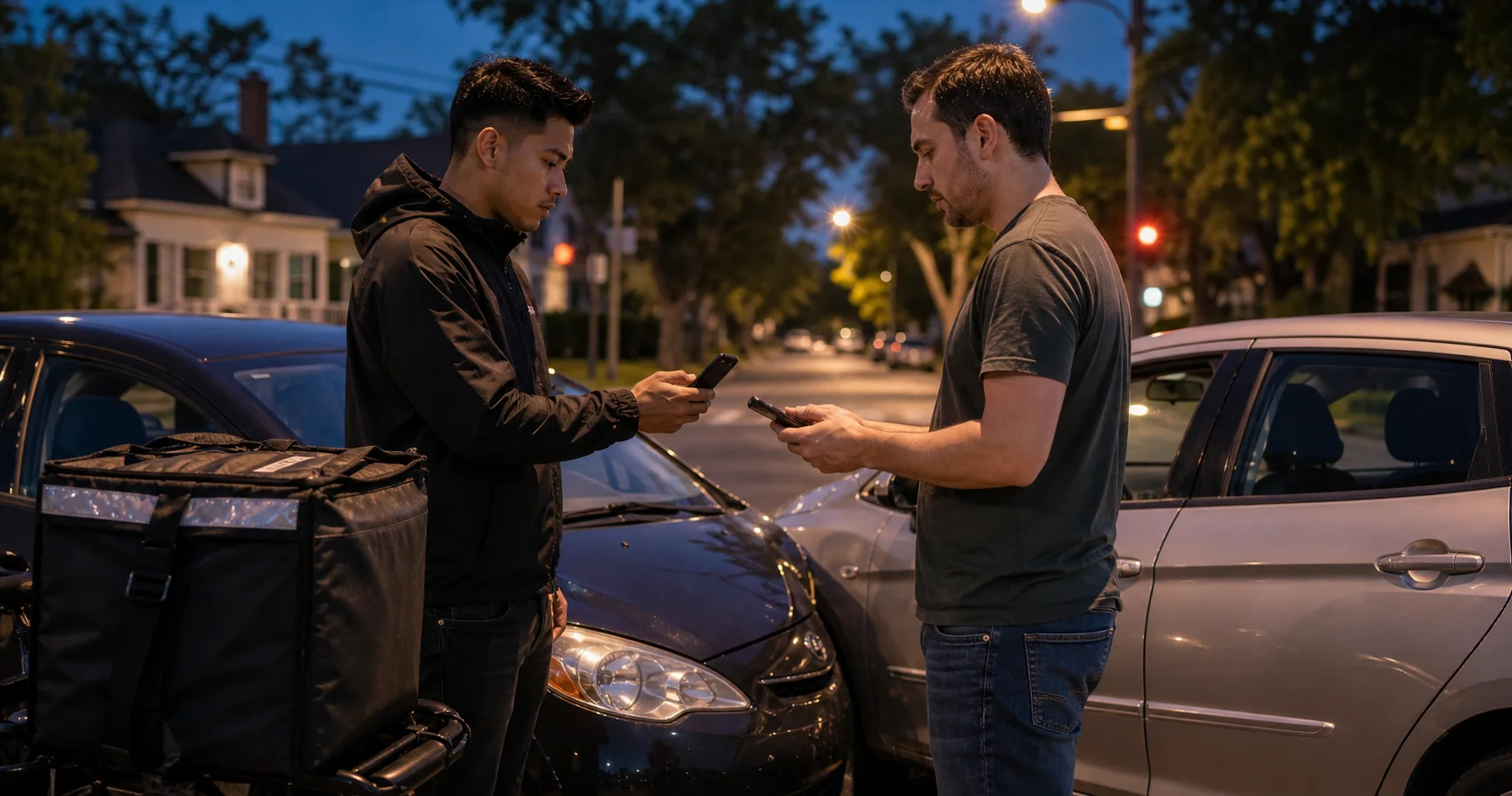
A crash with a DoorDash, Uber Eats, Amazon Flex, Instacart, or other delivery driver can involve the driver's personal policy, platform-provided coverage, a delivery company, or another commercial policy. Which coverage applies often depends on the app status and delivery phase at the exact moment of the collision.
Do not treat the case like an ordinary two-car claim. Preserve proof of the delivery activity before the driver logs out, the app record changes, or platform data becomes difficult to obtain.
Delivery Crash Coverage at a Glance
- App off: the driver's personal policy is usually the first place to investigate.
- Available but waiting: coverage varies by platform and policy.
- Delivery accepted or active: platform or commercial coverage may apply.
- Company-employed drivers: employer liability and fleet coverage may apply.
- Personal policies may dispute coverage for commercial delivery use.
Why Does App Status Matter?
Platforms divide work into periods. A driver may be logged off, available for an order, traveling to a pickup, carrying an order, or completing a drop-off. Coverage disclosures can change, so obtain the policy and trip record rather than relying on a generic website summary.
DoorDash currently describes third-party liability coverage during designated delivery periods, and Uber publishes separate insurance information for rideshare and delivery activity. Those disclosures are starting points, not substitutes for the policy in effect on the crash date.
Who May Be Responsible?
| Party | Evidence to Review |
|---|---|
| Delivery driver | Driving conduct and personal policy |
| Platform insurer | App status, accepted order, and platform policy |
| Delivery company | Employment, route, dispatch, and fleet records |
| Restaurant or retailer | Usually limited, but facts and contracts matter |
| Other driver | Comparative fault and separate insurance |
What Evidence Should You Collect?
- Photograph the delivery bag, packages, vehicle, and scene without interfering with safety.
- Record the driver's name, insurer, platform, and employer.
- Save screenshots of messages or admissions identifying an active delivery.
- Identify pickup and drop-off locations if known.
- Preserve nearby video and witness contacts.
- Request app, GPS, order, dispatch, and insurance records promptly.
What If the Personal Insurer Denies the Claim?
A commercial-use exclusion can lead a personal insurer to deny or reserve rights. That denial does not end the investigation. The active-delivery policy, employer coverage, vehicle-owner policy, UM/UIM coverage, and other responsible drivers may still matter.
Frequently Asked Questions
Does DoorDash provide insurance in Texas?
DoorDash publishes third-party liability coverage for certain delivery periods, but the policy and app status on the crash date control.
Is Amazon responsible for every Amazon delivery crash?
No. Amazon-branded fleet drivers, contractors, and Amazon Flex drivers can involve different companies and policies.
What if the driver deleted the app?
Platform records, phone data, receipts, witnesses, and discovery may still establish delivery activity.
Can my UM/UIM coverage apply?
It may apply when responsible liability coverage is absent or insufficient, subject to the policy and Texas law.
Identify the Delivery Period Before Evidence Disappears
If a delivery driver injured you in Houston, preserve the platform and trip evidence immediately. A Houston car accident lawyer can investigate the available policies. Request a free consultation. This article is general information and not legal advice.
 Call (713) 747-7777