
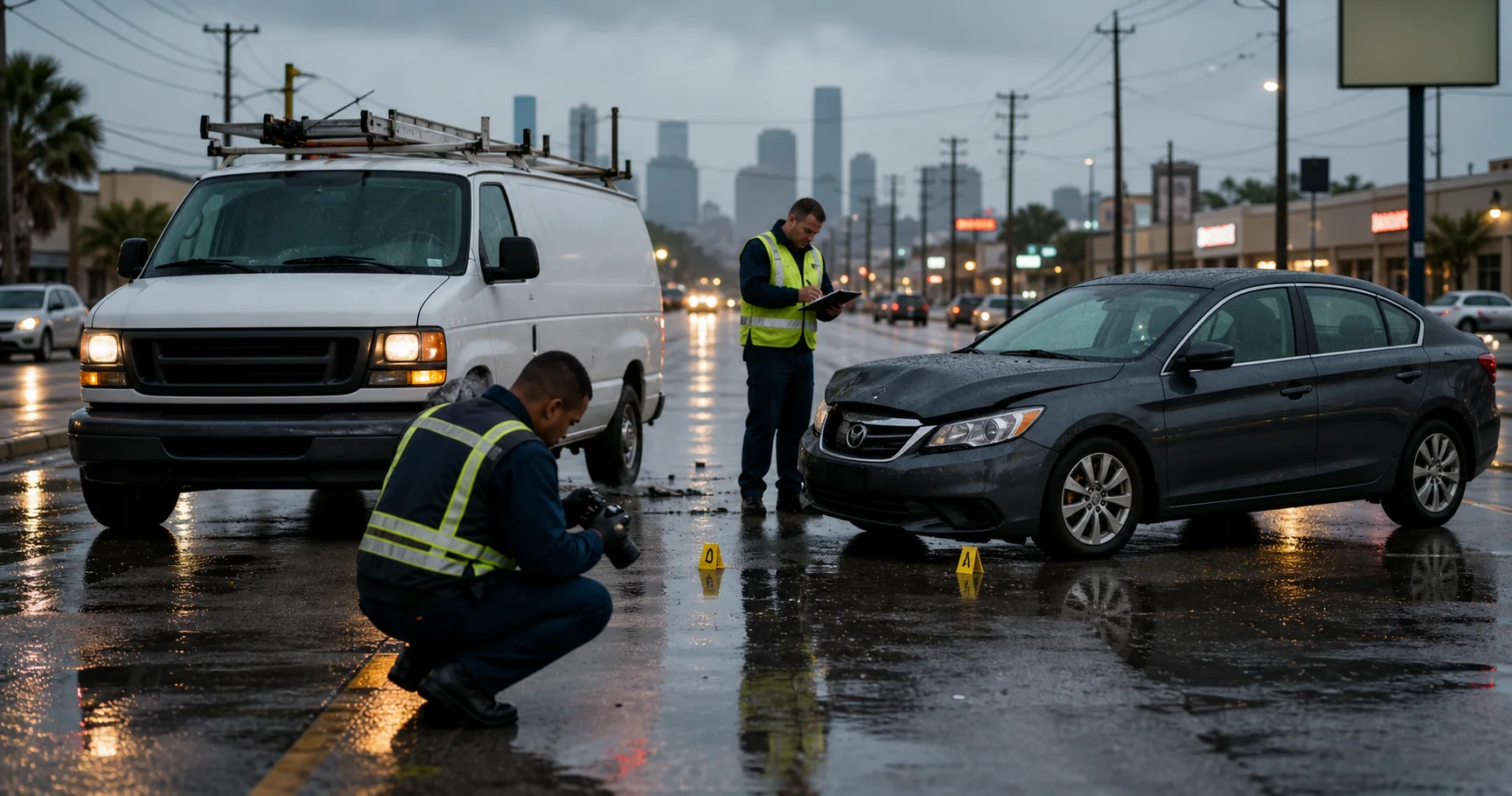
When an employee causes a Texas crash while performing job duties, the driver, employer, vehicle owner, contractor, or another business may be responsible. The decisive questions are who controlled the work, what the driver was doing, who owned the vehicle, and which commercial policies covered the trip.
Company-vehicle cases require faster evidence preservation than ordinary crashes because dispatch data, telematics, maintenance records, and internal communications can disappear.
Company Vehicle Claims at a Glance
- The driver can be liable for negligent driving.
- An employer may be responsible for an employee acting within the course and scope of employment.
- Vehicle ownership alone does not answer every liability question.
- Commercial insurance may provide more coverage than a personal policy.
- Direct negligence claims against a business depend on the evidence and Texas law.
When Is the Employer Responsible?
Texas applies the doctrine of respondeat superior when an employee's negligent conduct occurs within the course and scope of employment. A delivery route, service call, business errand, or directed trip may support employer responsibility. A substantial personal detour may produce a different result.
Texas Civil Practice and Remedies Code Chapter 72 also contains procedures affecting claims involving commercial motor vehicles and employer stipulations. The exact vehicle, employment relationship, and pleadings matter.
Who Might Be Responsible?
| Potential Party | Possible Basis |
|---|---|
| Driver | Speeding, distraction, unsafe turn, or other negligence |
| Employer | Vicarious liability for work performed in the course and scope |
| Vehicle owner or lessor | Contractual, maintenance, or fact-specific responsibility |
| Maintenance provider | Negligent repair connected to a mechanical failure |
| Manufacturer | Defective vehicle or component |
What Evidence Should Be Preserved?
- Photograph company markings, unit numbers, plates, equipment, and cargo.
- Identify the driver's employer and purpose of the trip.
- Preserve dashcam, telematics, GPS, dispatch, phone, and electronic-log data.
- Request inspection, maintenance, training, and qualification records.
- Document witnesses and nearby surveillance cameras.
- Send preservation notices before routine deletion periods expire.
How Is a Company-Vehicle Claim Different?
A personal auto claim often focuses on two drivers and one liability policy. A company-vehicle claim can involve layered commercial coverage, corporate defendants, electronic records, safety policies, and disputed worker classification. The company may have investigators at the scene quickly. The injured person should preserve independent evidence just as quickly.
What Damages May Be Available?
Recoverable damages can include reasonable medical expenses, lost earning capacity, physical impairment, pain, disfigurement, property damage, and other proven losses. Punitive damages require additional proof and are not automatic simply because a company is involved.
Frequently Asked Questions
Is a company always liable when its vehicle causes a crash?
No. Ownership is important, but employment status, course and scope, contracts, and other facts determine responsibility.
What if the driver says they are an independent contractor?
The label is not always decisive. Control, contracts, actual work practices, and applicable law must be examined.
Does a commercial policy guarantee full compensation?
No. Coverage, exclusions, liability, damages, and competing claims can limit recovery.
Should the damaged work vehicle be inspected?
Often yes, especially when brakes, tires, cargo, visibility, or onboard data may matter.
Preserve Business Records Early
If a work van, service truck, or other company vehicle caused your Houston crash, consult a Houston commercial-vehicle lawyer before evidence is overwritten. Request a free consultation. This article provides general information and is not legal advice.
 Call (713) 747-7777