

Table of contents
Introduction
Of all the injuries I see in my Houston personal injury practice, none are more misunderstood—or more systematically undervalued—than closed head injuries. These invisible injuries don’t show up on standard X-rays. They don’t leave visible scars. And because the human brain is extraordinarily complex, their symptoms can be maddeningly difficult to explain to insurance adjusters, defense attorneys, and juries who have never experienced them.
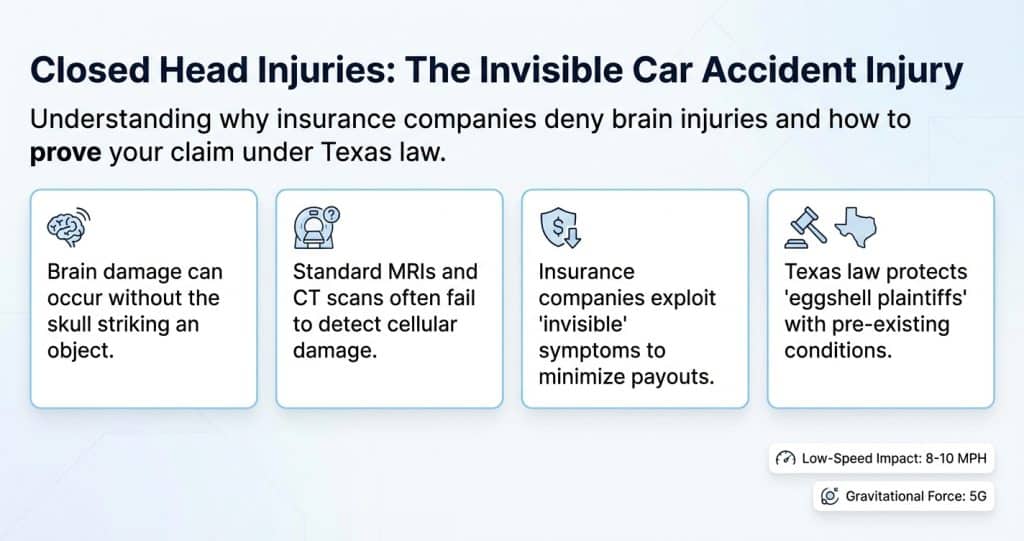
Insurance companies love closed head injury cases—not because they’re easy to handle fairly, but because they’re easy to deny. Without obvious objective proof of injury visible on a scan, adjusters routinely dismiss traumatic brain injuries as exaggerations, pre-existing psychological conditions, or problems that have nothing to do with the accident. They exploit the invisible nature of brain injuries to minimize claims and deny fair compensation.
But the medical reality is clear: even seemingly minor impacts can cause significant brain injuries with lasting, life-altering consequences. Research has shown that collisions at relatively low speeds can generate forces sufficient to damage the brain. The insurance company’s skepticism doesn’t change the science—or the suffering of brain injury victims.
If you or someone you love has suffered a head injury in a Texas car accident, understanding how these injuries work—and how insurance companies fight them—is essential to protecting your rights and recovering fair compensation.
Understanding Closed Head Injuries
A “closed head injury” occurs when the brain is damaged without any penetration of the skull. Unlike open head injuries—where a foreign object enters the brain cavity—closed head injuries happen through force transmission, acceleration-deceleration dynamics, and rotational forces that damage brain tissue even though the skull remains intact.
The Mechanism of Injury: In a car accident, your head doesn’t have to strike anything to sustain a brain injury. When your vehicle stops suddenly or changes direction violently, your brain—which floats in cerebrospinal fluid inside your skull—continues moving due to momentum. The brain can strike the interior of the skull, causing bruising (contusion) at the point of impact and sometimes on the opposite side as well (coup-contrecoup injury). The brain can also twist within the skull, stretching and tearing delicate neural connections (diffuse axonal injury).
The Physics: Research published in medical literature has demonstrated that collisions at speeds as low as eight to ten miles per hour can generate five times the force of gravity (5G) on the human head. This level of force is more than sufficient to produce brain stem injuries, cerebral concussion, and cranial nerve damage in a significant percentage of people. The common insurance company argument that “low-speed impacts can’t cause brain injuries” is simply not supported by science.
Concussion Is Brain Injury: The term “concussion” has historically been used to minimize brain injuries—as if a concussion is something minor that resolves quickly. Modern medical understanding recognizes that concussion is actually a form of traumatic brain injury (TBI). Even “mild” TBIs can have serious, long-lasting effects on cognition, emotion, and physical function. The word “mild” refers to the initial presentation, not to the ultimate consequences.
The Invisibility Problem: Unlike broken bones that appear clearly on X-rays or lacerations that leave visible scars, brain injuries often leave no obvious evidence on standard imaging. CT scans and MRIs frequently appear normal even when significant damage has occurred at the cellular and neuronal level. This invisibility is the primary reason these injuries are so often disputed by insurance companies—and why proper documentation and expert support are essential.
Recognizing the Symptoms of Closed Head Injuries
Closed head injury symptoms vary widely depending on the location and severity of the brain damage. If you’ve been in an accident, watch carefully for these warning signs—and make sure every symptom is reported to your doctors and documented in your medical records.
Cognitive Symptoms: Memory problems are among the most common symptoms, particularly difficulty forming new memories or recalling events around the time of the injury. You may find yourself repeating questions, forgetting conversations, or losing track of what you were doing. Concentration and attention difficulties make it hard to focus on tasks, follow conversations, or complete work that once came easily. Processing speed slows noticeably—everything takes longer, requires more effort, and exhausts you mentally. Problem-solving and decision-making become harder; tasks that require planning or complex thinking may feel overwhelming.
Physical Symptoms: Headaches are the most frequently reported symptom, ranging from mild and occasional to severe and constant, sometimes persisting for months after the injury. Dizziness and balance problems occur when the vestibular system is affected, making you feel unsteady or like the room is spinning. Fatigue and sleep disturbances are extremely common—you may sleep excessively yet never feel rested, or you may have insomnia and difficulty falling or staying asleep. Sensitivity to light and noise can make normal environments unbearable; bright lights and loud sounds may trigger headaches or feel physically painful. Nausea, vision problems including blurred or double vision, and ringing in the ears (tinnitus) may also occur.
Emotional and Behavioral Symptoms: Mood changes are common even in mild TBI—increased irritability, unexplained anxiety, depression, or emotional flatness. Emotional regulation becomes difficult; you may cry easily, have angry outbursts over minor frustrations, or feel emotions more intensely than before. Personality changes can strain relationships as family members notice you’re not acting like yourself. Loss of motivation and interest in previously enjoyed activities often occurs, mimicking depression but having a neurological rather than purely psychological basis.
Delayed Symptom Onset: Critically, many closed head injury symptoms don’t appear immediately after the accident. You might feel fine at the scene and for hours afterward, only to develop problems over the following days or weeks. This delayed onset creates documentation challenges because your initial medical records—created at the emergency room or urgent care—may show no apparent head injury. This gap is routinely exploited by insurance companies arguing that your symptoms must have been caused by something other than the accident.
Why Insurance Companies Deny Brain Injury Claims
Closed head injury claims face unique challenges that insurance companies exploit ruthlessly to deny or minimize compensation.
The “No Objective Evidence” Argument: Because brain injuries often don’t show on CT scans or MRIs, insurance adjusters argue there’s no objective proof of injury. They characterize your symptoms as “subjective”—meaning they exist only because you say they do, not because a test confirms them. This argument ignores the well-established medical reality that brain damage frequently occurs at a level too subtle for conventional imaging to detect.
The Low-Impact Defense: Insurance companies frequently argue that your accident wasn’t severe enough to cause brain injury. They point to minimal vehicle damage, low estimated speeds, or lack of visible trauma and claim that the forces involved couldn’t possibly have injured your brain. This defense ignores the medical research showing that brain injuries can occur at surprisingly low impact speeds—and that vehicle damage doesn’t correlate reliably with occupant injury.
Pre-Existing Condition Attribution: Any prior history of head injury, headaches, anxiety, depression, ADHD, learning difficulties, or other conditions becomes ammunition for the defense. They’ll argue your current symptoms are simply continuations of these prior problems, not new injuries from the accident. Even if the accident genuinely aggravated or worsened pre-existing conditions—which is compensable under Texas law—they’ll deny the connection.
Psychological Causation Claims: Insurance companies often try to recharacterize brain injury symptoms as purely psychological—depression, anxiety, adjustment disorder, or post-traumatic stress—rather than neurological injury. While psychological conditions can certainly result from TBI and are themselves compensable, attributing everything to psychology allows insurers to minimize the injury’s apparent severity and argue that you should simply “get therapy and get over it.”
Lack of Immediate Documentation: If you didn’t lose consciousness at the scene, didn’t go to the emergency room, or didn’t report head-related symptoms immediately after the accident, insurance companies will argue you couldn’t have suffered a brain injury. They exploit the delayed symptom onset that’s actually characteristic of many TBIs to deny that the accident caused your problems.
Proving Your Closed Head Injury Under Texas Law
Overcoming insurance company resistance to brain injury claims requires building a comprehensive case with proper medical documentation and expert support.
Immediate Documentation: If you hit your head during the accident, lost consciousness even briefly, or experienced any head-related symptoms at the scene—disorientation, confusion, dizziness, headache, visual disturbances, ringing in ears—make absolutely sure these facts are documented. Tell the EMTs. Tell the emergency room staff. Tell your doctor. Document it in writing yourself. Even brief loss of consciousness is medically significant and should trigger thorough evaluation.
Comprehensive Neurological Evaluation: A thorough neurological examination by a qualified physician can identify deficits that support a brain injury diagnosis even when imaging studies are normal. The neurologist will test cognitive function, cranial nerve function, reflexes, coordination, balance, and other indicators of brain health. Ask your doctor for a detailed neurological assessment and referral to a neurologist if indicated.
Neuropsychological Testing: Neuropsychologists administer comprehensive testing batteries that objectively measure cognitive function—memory, attention, concentration, processing speed, executive function, language abilities, and more. These standardized tests can identify deficits compared to expected norms and quantify their severity. Neuropsychological testing provides objective evidence that’s difficult for insurance companies to dismiss.
Before-and-After Evidence: Documenting how you functioned before the accident compared to after is crucial for proving the accident caused your deficits. Gather work performance records showing decline after the accident, academic records if applicable, testimony from coworkers, supervisors, family members, and friends about changes they’ve observed, and your own documentation of specific incidents demonstrating cognitive problems. This comparative evidence shows the accident’s impact on your actual functioning.
Symptom Journaling: Keep a detailed daily journal documenting your symptoms: headaches (severity, duration, triggers), memory problems (specific instances of forgetting), concentration difficulties (tasks you couldn’t complete, mistakes you made), mood changes, sleep disturbances, and functional limitations. Note specific examples: “Forgot my daughter’s doctor appointment even though it was on the calendar.” “Got lost driving to a store I’ve visited dozens of times.” “Couldn’t follow the plot of a TV show.” These specific incidents are powerful evidence of real-world cognitive impairment.
Medical Expert Support: In litigation, neurologists and neuropsychologists can provide expert testimony supporting your injury diagnosis and explaining how the accident caused your symptoms. Expert testimony is often essential in brain injury cases to educate the jury about how TBI works, why symptoms may not appear on imaging, and why your deficits are genuine even though they’re “invisible.”
Texas Law and Brain Injury Damages
Understanding how Texas law treats brain injury claims helps you build and present your case effectively.
Causation Standards: Under Texas law, you must prove by a preponderance of the evidence—meaning more likely than not—that the accident caused your brain injury. Medical expert testimony is typically necessary to establish this causation, particularly because the defense will aggressively challenge the connection between the accident and your symptoms.
Categories of Recoverable Damages: Brain injury claims can include significant damages across multiple categories. Past medical expenses include all treatment costs from the accident to date, including emergency care, hospitalization, specialist consultations, imaging studies, neuropsychological testing, therapy, and medications. Future medical expenses cover anticipated ongoing treatment costs, which can be substantial for TBI patients who may need long-term cognitive rehabilitation, therapy, and medical management. Lost earning capacity addresses how the brain injury affects your ability to work at your previous level—TBI victims often cannot return to demanding jobs, must work reduced hours, or become completely unable to work. Pain and suffering encompasses the physical symptoms (headaches, fatigue, sensory sensitivities) and emotional suffering (frustration, depression, anxiety) caused by the injury. Loss of enjoyment of life compensates for activities and pleasures you can no longer engage in because of cognitive and physical limitations.
Future Damages and Life Care Planning: Many brain injury effects are permanent or long-lasting. Texas law allows recovery for future damages, but these must be proven with reasonable certainty. Life care planners—experts who assess TBI patients’ long-term needs—can document anticipated future medical expenses, support services, and care requirements. Economist experts can calculate the present value of future lost earning capacity.
The Eggshell Plaintiff Doctrine: Texas follows the “eggshell plaintiff” rule: defendants take plaintiffs as they find them. If you were more susceptible to brain injury due to age, prior head injuries, pre-existing conditions, or other factors, the defendant is still liable for the full extent of your damages. The at-fault driver cannot escape responsibility by arguing you were unusually vulnerable.
Getting Appropriate Medical Care
Proper medical care is essential both for your recovery and for documenting your claim. Don’t let concerns about the insurance company prevent you from getting the treatment you need.
Primary Care as Starting Point: Begin with your primary care physician, but recognize that brain injuries often require specialist evaluation. Describe all your symptoms thoroughly. Ask for referrals to appropriate specialists.
Neurology Consultation: A neurologist specializes in disorders of the nervous system, including brain injuries. They can assess your symptoms, order appropriate diagnostic testing, rule out other conditions, and provide treatment recommendations. Their documented opinions about diagnosis and causation are valuable evidence.
Neuropsychological Evaluation: Formal neuropsychological testing provides objective measurement of cognitive function. This testing is particularly valuable when brain imaging is normal but symptoms persist—the neuropsychological test results provide objective evidence of cognitive deficits that support your claimed injury.
Rehabilitation Services: Cognitive rehabilitation therapy, occupational therapy, speech therapy, and other rehabilitation services may help you recover function. Engaging in recommended rehabilitation demonstrates you’re taking your recovery seriously and documents the extent of treatment required.
Mental Health Treatment: Don’t avoid psychological treatment for anxiety, depression, or other emotional symptoms out of fear it will hurt your case. Psychological symptoms are a recognized consequence of TBI and are themselves compensable. Getting treatment shows you’re addressing all aspects of your injury—and untreated symptoms only worsen over time.
Common Mistakes in Brain Injury Cases
Avoid these errors that commonly undermine closed head injury claims.
Downplaying Symptoms: Don’t tell doctors you’re “fine” when you’re experiencing cognitive or emotional problems. Many people, especially men, minimize these symptoms out of embarrassment or denial. This creates documentation gaps that hurt your claim. Report everything.
Ignoring “Minor” Symptoms: Headaches, difficulty concentrating, and mood changes may seem minor compared to broken bones or surgical injuries. But they can profoundly impact your quality of life and are compensable under Texas law. Document and report all symptoms, even ones that seem relatively minor.
Assuming You’ll Just Get Better: Some brain injury victims refuse to accept their limitations, pushing through symptoms and avoiding treatment. This denial delays recovery and undermines your documentation. Accept that you’ve been injured and pursue appropriate care.
Social Media Activity: That photo of you smiling at a family event? The insurance company will use it to argue you’re not really suffering. That post about going to dinner with friends? Evidence you must be functioning fine. Stay off social media until your claim is resolved—or assume everything you post will be used against you.
Accepting Early Settlement Offers: Brain injury effects can take months or even years to fully manifest and stabilize. Accepting an early settlement offer locks you into compensation based on incomplete understanding of your condition. Don’t settle until you know the full extent of your injury.
Skipping Neuropsychological Testing: If your symptoms persist but imaging is normal, neuropsychological testing provides objective evidence of cognitive deficits. Don’t let cost concerns or fear of what the tests might show prevent you from obtaining this valuable evidence.
Conclusion: Fighting for the Invisible Injury
Closed head injuries are real, serious, and often life-altering—even when they don’t show up on scans and can’t be seen from the outside. If you’ve suffered a brain injury in a Houston car accident, you deserve compensation that reflects the true impact on your life.
Don’t let insurance companies dismiss your invisible injury as exaggeration, pre-existing conditions, or psychological problems. The science is clear that brain injuries occur even in relatively minor accidents, that imaging often fails to detect real damage, and that symptoms frequently appear days or weeks after the initial trauma.
Document your symptoms thoroughly from the very beginning. Seek proper medical evaluation and treatment from qualified specialists. Get neuropsychological testing to provide objective evidence of cognitive deficits. Keep detailed records of how the injury affects your daily functioning. And work with an attorney who understands the unique challenges of brain injury claims and knows how to build cases that overcome insurance company resistance.
The brain is the most complex organ in the human body. It controls everything we do, think, and feel. Injuries to it deserve serious attention—from the medical system, from the legal system, and from insurance companies that would rather pretend these injuries don’t exist.
If you’re struggling with symptoms after a head injury, you’re not imagining things. You’re not malingering. You’re not crazy. You’re dealing with a real injury that deserves real compensation. Don’t give up the fight.

About the Author
Chi Nguyen is a Houston personal injury attorney dedicated to helping accident victims understand their rights and receive fair compensation under Texas law. With extensive experience representing injured Texans, Attorney Nguyen combines legal expertise with a commitment to client education and empowerment.